Why Scheduled Events Make Socializing Easier
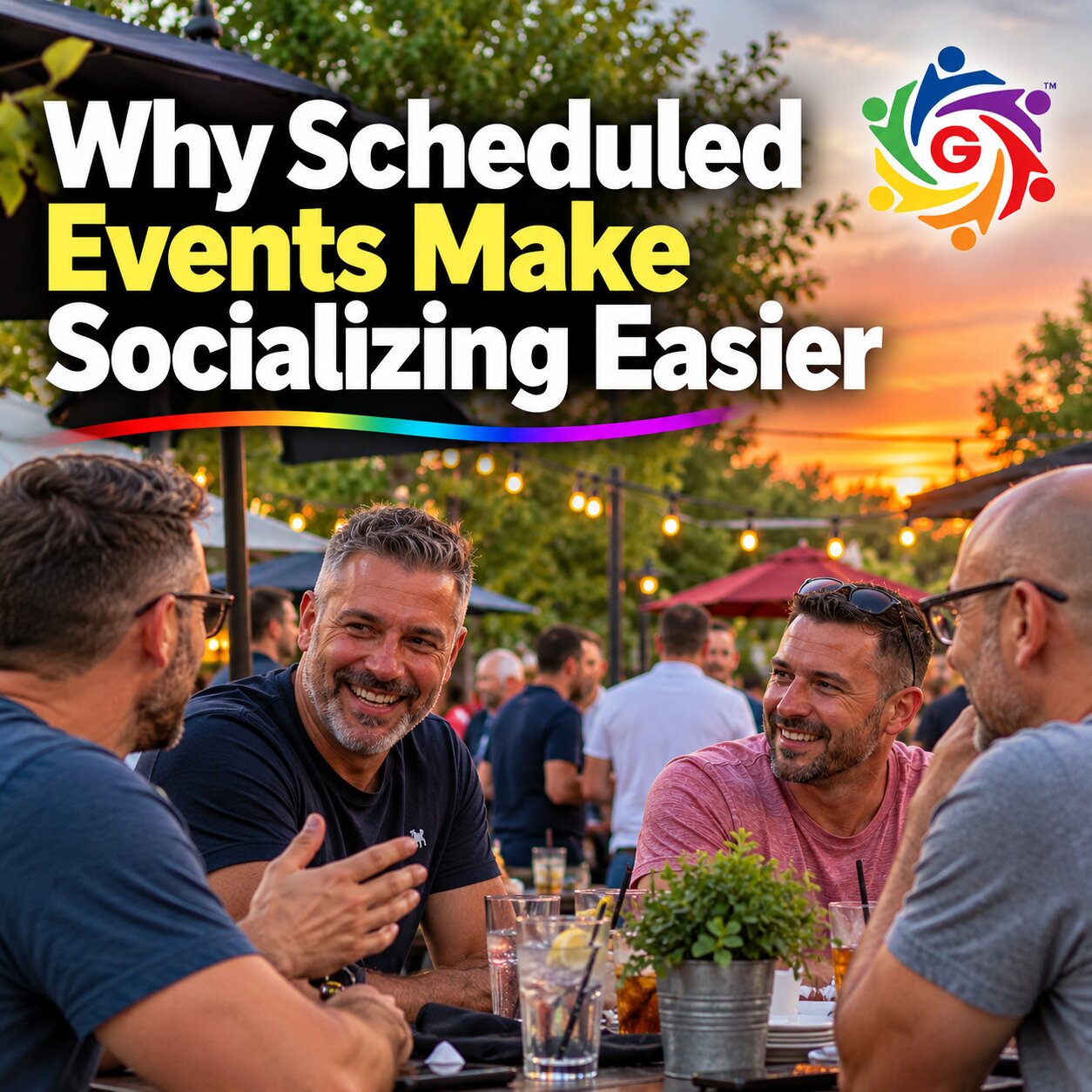
Making plans sounds simple until you actually try.
Someone suggests getting together. Another person asks when. One person is free Saturday, but someone else is working. Sunday might work, but someone else already has plans. Someone suggests the following weekend, but by then another schedule has changed. Even when everyone genuinely wants to spend time together, organizing a simple social activity can become surprisingly complicated.
Sometimes the problem is not a lack of interest. It is the amount of coordination required to turn an idea into an experience.
That is one reason scheduled social events can make getting out and doing something considerably easier. The date has already been selected. The time is established. The location is known. The activity has been chosen. Instead of organizing an entire experience, you only need to make one decision.
Do I want to go?
That seemingly small difference can remove much of the friction that prevents good intentions from becoming real experiences.
Planning Can Become More Work Than the Activity
Consider everything that can happen before a group of friends gets together.
Someone needs to suggest an idea. People need to agree on what they want to do. A date has to work for everyone, or at least most people. Someone may need to find a restaurant, make a reservation, purchase tickets, research parking, determine travel time, or coordinate transportation.
Then the messages begin.
What time works?
Where should we meet?
Is everyone okay with that restaurant?
Should we buy tickets now?
Who is driving?
Can we move it to the following weekend?
None of these decisions is particularly difficult on its own. Combined, however, they create enough friction that an enjoyable idea can remain an idea for weeks or disappear entirely.
The irony is that everyone involved may genuinely want to get together.
A Scheduled Event Changes the Question
Once you organize an event, many of those decisions disappear.
You no longer have to figure out what everyone wants to do. You are looking at a specific experience and deciding whether it interests you.
Instead of asking several people to compare calendars, you can check the date and decide whether you are available. Instead of debating locations, you already know where the event will take place. Instead of trying to create an activity everyone might enjoy, you can decide whether that particular activity appeals to you.
The question changes from “What should we all do?” to “Would I like to do this?”
That question is much easier to answer.
You Do Not Need to Assemble Your Own Group
Another advantage of scheduled social experiences is that participation does not necessarily depend on convincing friends to come with you.
This can be especially important for someone who wants to become more socially active but whose existing friends have different schedules, interests, responsibilities, or priorities.
You may want to visit a farm, try a creative activity, explore somewhere new, enjoy a meal, attend a festival, take a day trip, or experience something you have never done before. Your friends may not be available when you are.
That does not mean you have to stay home.
An organized social experience creates an opportunity to participate without first assembling your own group. Other people have made the same decision to attend, which means the social environment already exists when you arrive.
For someone used to waiting until a friend is available, that can open up many more possibilities.
Different Activities Attract Different People
Scheduled events also make it easier to choose experiences based on your own interests.
Not everyone enjoys the same things. One person may love hiking while another would rather spend an afternoon at a museum. Someone may enjoy a relaxed meal and conversation, while someone else prefers an activity where everyone is doing something together.
Those differences are not wrong.
In fact, a variety of scheduled experiences can make social participation easier because not every event needs to appeal to everyone. You can choose the experiences that genuinely interest you.
That can also create more natural opportunities for conversation. When people voluntarily choose the same activity, they already have at least one thing in common: they were interested enough in that experience to show up.
The activity provides an immediate starting point.
Someone Else Has Already Done the Planning
There is also something enjoyable about occasionally letting someone else handle the logistics.
When you organize your own outing, part of your attention remains on whether everything is working. Did everyone find the location? Is the reservation correct? Are people enjoying themselves? What happens next?
At an organized event, much of that responsibility belongs to the organizer.
You can participate.
You can experience the activity, talk with people, explore the location, enjoy the meal, create something, laugh when something unexpected happens, and let the experience unfold without coordinating every detail.
Sometimes being a participant rather than the planner makes socializing considerably more relaxing.
Scheduled Experiences Create Something to Look Forward To
Putting an experience on the calendar can also give us something concrete to anticipate.
There is a difference between saying, “We should do something this fall,” and knowing that on a particular Saturday you are going somewhere.
One is an intention.
The other is a plan.
Once an event has a date, time, location, and activity, it becomes part of the calendar rather than another possibility floating somewhere in the future.
That does not mean every scheduled experience will become memorable or lead to a new friendship. Social experiences do not need to carry that kind of pressure.
Sometimes it is enough to have something enjoyable ahead of you.
You Still Have to Make One Important Decision
Of course, an organized event cannot eliminate every obstacle.
You still have to register. You still have to make room in your schedule. You still have to get ready, leave the house, travel to the location, and walk through the door.
The organizer can help reduce planning friction, but they can't make the final decision for you.
That part belongs to you.
The advantage is that you are making one decision instead of twenty.
You do not have to create the experience.
You have to decide whether you want to be part of it.
Showing Up Can Create New Possibilities
One interesting thing about scheduled social events is that we rarely know exactly what will happen before we attend.
We may discover an activity we enjoy more than expected. We may have a conversation with someone we would never have met otherwise. We may recognize someone from a previous experience. We may find a restaurant, town, attraction, or activity we want to visit again.
Or we may have an enjoyable afternoon or evening.
All of those outcomes have value.
Friendship cannot be guaranteed by attending an event, and it should not be. Relationships develop through compatibility, mutual interest, repeated interaction, effort, and time.
An event can provide opportunity.
It puts people in the same place, around a shared experience, with the possibility that something develops naturally.
Making Socializing Simpler
At Garden State Gay Socials™, we create and organize experiences so the guys attending don't have to.
We choose activities, establish dates and locations, coordinate the experience, and provide the information you need to decide whether an event sounds right for you.
Our experiences can include meals, seasonal outings, creative activities, recreational experiences, cultural destinations, day trips, and other opportunities for gay men to get out, enjoy something different, and meet people along the way.
You do not need to organize a group before attending. You do not need to convince several friends to agree on a date. You do not need to arrive already knowing everyone.
You can look at what is scheduled, choose something that interests you, register, and show up.
Sometimes making socializing easier is not about finding more time.
It is about removing enough decisions that getting out and doing something becomes simple again.
The event is already planned. The only question left is whether you want to be there.
Explore our upcoming experiences at:
https://gardenstategaysocials.com/events
And remember to sign up for our bi-monthly newsletter, Guys Gay Spectrum™, to stay up to date on upcoming Garden State Gay Socials experiences, community news, and more.
Friendship First. Integrity Always.™
Not professionally written; too many unbalanced sentences
You're right. The first version reads too much like social media copy stretched into a blog. Too many isolated sentences, repeated constructions, and short paragraphs. For the website, please develop professional paragraphs with balanced sentence structure and a smoother editorial flow.
Here is the rewrite.
Why Scheduled Events Make Socializing Easier
Making plans with other people should be relatively simple, yet anyone who has tried to coordinate a group knows how quickly a casual idea can become an exercise in scheduling. Someone suggests getting together, several options are discussed, calendars are compared, locations are considered, and eventually a perfectly good idea gets buried under a collection of messages about availability. Everyone may genuinely want to participate, but turning that interest into an actual plan requires someone to make decisions and keep the process moving.
The challenge is not necessarily that people have become less interested in socializing. Modern schedules are often complicated, and even a small gathering can require several people with different responsibilities, interests, travel considerations, and available time to agree on the same details. When every part of an experience still needs to be decided, organizing it can sometimes take more effort than attending.
Scheduled social events change that equation because much of the decision-making is already done. The date is set, the time is known, the location is chosen, and the activity is organized. Instead of coordinating an entire experience from the beginning, someone can look at what is being offered and make a simpler decision about whether it interests them and fits their schedule.
Planning Often Creates More Friction Than We Realize
Most social plans begin with good intentions. Someone mentions a restaurant they would like to try, an attraction they have wanted to visit, a seasonal activity that sounds enjoyable, or simply the idea of getting together. The enthusiasm may be genuine, but enthusiasm alone doesn't put something on the calendar.
Please suggest a date, confirm availability, choose a time, confirm the location, research any necessary reservations or tickets, and make sure everyone understands the plan. If the first proposed date doesn't work, the process starts again. Add several people to the conversation, and the number of variables increases quickly, particularly when everyone has different work schedules, family obligations, travel distances, and personal commitments.
None of these individual decisions is especially difficult, but collectively they create friction. A social experience that initially sounded easy can begin to feel like a project, and the person who first suggested it may eventually stop trying to coordinate everyone. The result is familiar: people who genuinely wanted to spend time together never actually do because the plan never became specific enough to happen.
A Scheduled Event Simplifies the Decision
An organized event removes many of those preliminary decisions by presenting an experience that already has structure. Rather than asking several people what they want to do and trying to find a date that works for everyone, an individual can consider a specific activity at a specific time and location.
This changes the nature of the decision. Instead of asking what everyone should do, where everyone should go, and when everyone might be available, the individual only needs to decide whether the scheduled experience appeals to them and whether they can attend.
That distinction may seem minor, but it can substantially reduce the effort involved in maintaining an active social life. People no longer have to create every opportunity themselves because some already exist. Their responsibility is to recognize the ones that interest them and decide whether to participate.
You Do Not Always Need to Assemble Your Own Group
One limitation of relying exclusively on an existing circle of friends for social activities is that not everyone will share the same interests or availability. A person may want to explore a new destination, attend a seasonal event, try a creative activity, enjoy a particular restaurant, or do something recreational, only to discover that none of his friends is available at the same time.
In those circumstances, it's easy to postpone the experience until someone else can participate. Unfortunately, repeated postponements can limit what we get to do, especially when the activity requires several schedules to align before anyone is willing to commit.
Scheduled group experiences provide another option because participation does not depend upon assembling a private group first. Other people have independently chosen to attend the same activity, which means the social setting already exists. Someone can therefore participate because the experience interests him rather than because he successfully convinced several friends to become available at the same time.
This does not diminish the value of doing things with established friends. It simply expands the possibilities available when those friends are busy, uninterested in a particular activity, or unable to participate.
Shared Interests Give Conversation Somewhere to Begin
Scheduled experiences can also create a natural foundation for conversation because attendees have already made at least one similar choice. They selected the same activity.
That shared decision does not mean everyone will have similar personalities or become friends, and it shouldn't be expected. It does, however, provide immediate context. People attending a seasonal outing can talk about the location or other places they have visited. Participants in a creative activity can discuss what they are making. A meal can naturally lead to conversations about restaurants, travel, cooking, or favorite foods, while a day trip offers changing surroundings and experiences that continually introduce new subjects.
This is one reason activity-based social experiences can feel different from environments where conversation itself is the primary purpose. The activity gives people something to experience together. At the same time, conversation develops around it, reducing some of the pressure of entering a room and immediately trying to figure out what to say.
Different Experiences Create Different Opportunities
No single social environment will appeal equally to everyone, so variety matters. Someone who enjoys an outdoor activity may have little interest in a formal dinner, while another person may prefer a museum, restaurant, creative experience, or cultural destination to anything recreational. Neither preference is more socially valuable than the other.
A calendar with different kinds of scheduled experiences lets people choose based on their own interests rather than trying to find one activity that satisfies an entire group. This can make participation more personal because the decision begins with genuine curiosity about the experience rather than an obligation to accommodate everyone else's preferences.
Variety also creates opportunities to meet people in different settings. Someone may be quiet during a large gathering but become much more conversational while participating in an activity he enjoys. Another person may prefer a relaxed meal with time for extended conversation, while someone else connects more naturally when the group is moving, exploring, or creating something together.
The goal isn't to find one perfect social environment. It is to create enough different opportunities that people can discover which experiences feel most natural to them.
There Is Value in Letting Someone Else Handle the Details
People who frequently organize outings know planning doesn't necessarily end when everyone arrives. The organizer may still be thinking about reservations, timing, directions, tickets, transportation, the next part of the itinerary, or whether everyone understands what is happening.
Participating in an event organized by someone else creates a different experience. Much of the logistical responsibility has already been handled, allowing participants to concentrate more fully on the activity and the people around them. They can enjoy the destination, participate in the experience, have conversations, and let the day or evening unfold without managing every operational detail.
There is considerable value in occasionally being the participant rather than the planner. Socializing can feel much less complicated when someone else has already created the framework.
A Date on the Calendar Turns an Idea Into Something Real
There is an important difference between wanting to do something and having something scheduled. People frequently talk about restaurants they should try, places they should visit, activities that sound interesting, and friends they should see more often. I understand those intentions are sincere, but without a specific date, they remain possibilities indefinitely.
A scheduled event gives the experience a defined place in time. Instead of vaguely intending to do something during the fall, for example, someone knows that a particular activity is happening on a particular Saturday. That makes it possible to reserve the time, plan around it, and look forward to something concrete.
Anticipation is part of the value of social experiences. Not every event needs to become an extraordinary memory, produce a new close friendship, or justify itself through some dramatic outcome. Sometimes having an enjoyable activity on the calendar provides value simply because it gives us somewhere to go, something different to experience, and an opportunity to spend time around other people.
Organized Events Remove Decisions, Not Responsibility
Although scheduled events can remove much of the planning burden, they cannot make the final decision for the person considering attending. Registration still needs to happen, time needs to be reserved, and the individual will need to get ready, leave home, travel to the location, and participate.
The key difference is that fewer organizational decisions surround those steps. Someone does not need to create the activity, coordinate multiple schedules, research locations, or persuade other people to participate before deciding whether the experience is worthwhile.
The organizer can create the opportunity and remove many of the logistical obstacles, but participation remains a personal choice. That balance matters because an active social life cannot be completely organized for us, even when individual experiences are much easier to join.
Scheduled Experiences Create Possibilities
No responsible social organization can promise that attending an event will produce friendship. Relationships depend upon compatibility, mutual interest, communication, continued effort, repeated interaction, and time. Attempting to guarantee those outcomes would place unrealistic expectations on both the experience and the people attending it.
What a scheduled social event can provide is opportunity. It can bring people into the same environment around an activity they chose to experience, creating circumstances in which conversation, familiarity, shared interests, and future connections have room to develop.
Sometimes an event leads to meeting someone interesting. Sometimes it introduces an activity or destination worth experiencing again. Sometimes a person recognizes someone from a previous gathering and continues a conversation that began weeks earlier. Other times the result is simply an enjoyable afternoon or evening that would not have happened if the person had stayed home.
You don't need to rank those outcomes against one another. A healthy social life is generally built from many ordinary experiences rather than a small number of extraordinary ones.
Making Socializing Easier at Garden State Gay Socials™
Garden State Gay Socials™ was created around the idea that meaningful social opportunities are easier to join when people have something specific to experience together. Rather than asking community members to organize their own groups before participating, GSGS develops scheduled experiences that provide the date, location, activity, and structure in advance.
Our calendar can include meals, seasonal outings, creative activities, recreational experiences, cultural destinations, day trips, and other opportunities that give gay men throughout New Jersey different ways to get out, participate, and meet people in a friendship-focused environment. Because different experiences appeal to different people, the objective is not to create one type of event for everyone but to provide enough variety that individuals can choose what genuinely interests them.
Participants do not need to arrive with an established group of friends, and they do not need to know everyone before attending. They can review the experiences already scheduled, choose something that fits their interests and availability, register, and let the experience itself provide the setting for whatever conversations and connections develop naturally.
Sometimes making socializing easier does not require finding more time or creating more complicated plans. It simply requires removing enough organizational friction to separate wanting to do something from actually doing it.
At Garden State Gay Socials™, we create the opportunity and handle the planning. Your role is much simpler: choose an experience that interests you and decide to be part of it.
Explore upcoming Garden State Gay Socials experiences at:
Remember to sign up for our bi-monthly newsletter, Guys Gay Spectrum™, for upcoming experiences, community news, and updates from Garden State Gay Socials™.
If you are new to Garden State Gay Socials™, take a few minutes to learn more about who we are and the kind of community we are building. Visit our About Us page to learn more about GSGS, review our Code of Conduct to understand the standards that help guide our community, and explore our Membership Benefits to see the different ways you can become more involved. When you are ready to get out and experience something with us, visit our Events page to see what is already on the calendar.
Friendship First. Integrity Always. ™
Leave A Comment
Please login to add a comment!
Comments (0)