You Don’t Have to Be Loud to Belong: Making Space for Every Kind of Gay Man
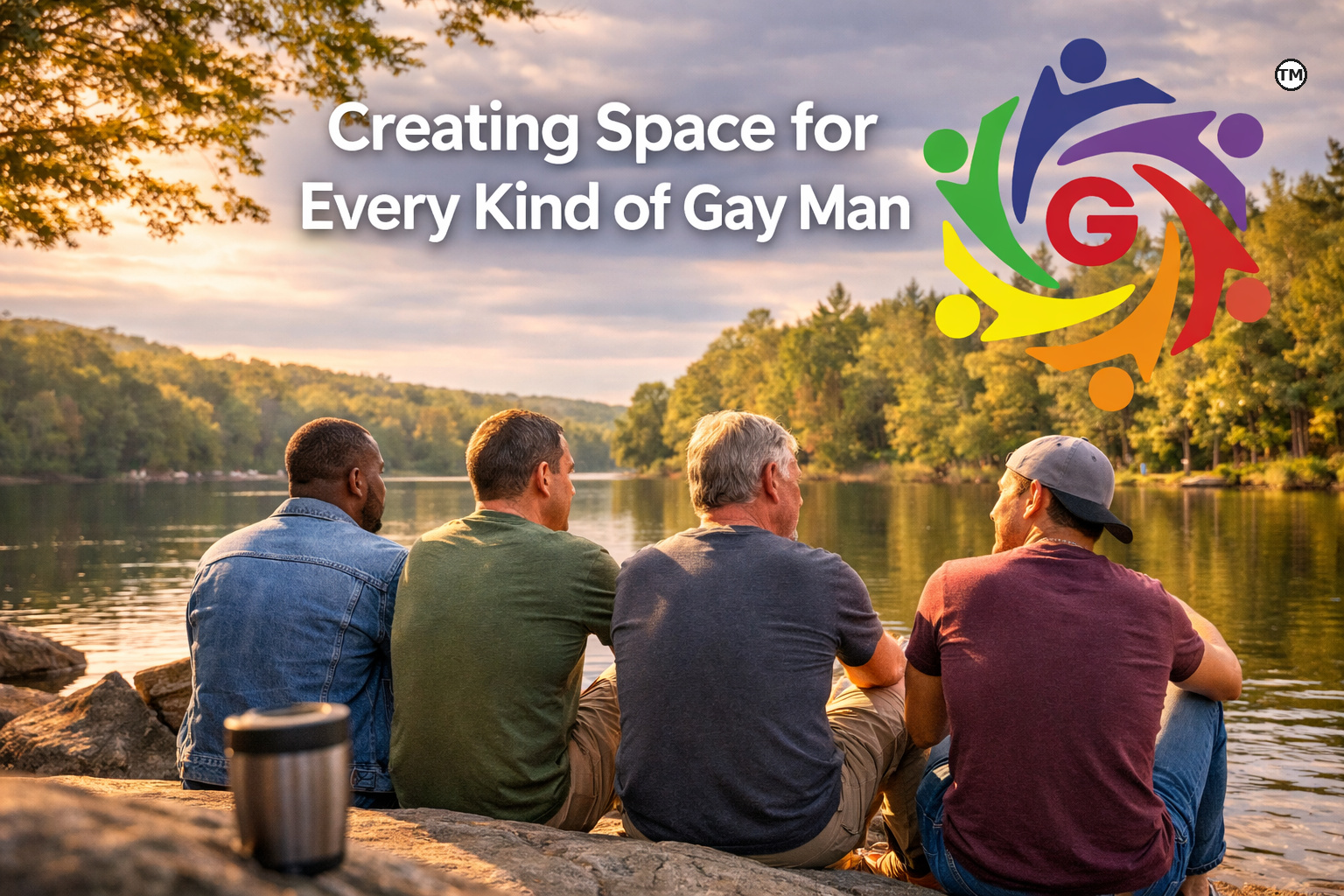
You Don’t Have to Be Loud to Belong: Making Space for Every Kind of Gay Man
For a long time, many gay men have absorbed the idea that belonging requires a certain kind of energy.
Being confident.
Being outgoing.
Being quick with conversation.
Being comfortable taking up space.
If you don’t fit that mold, it can quietly feel like you’re doing something wrong.
But the truth is simpler — and kinder:
You don’t have to be loud to belong.
Belonging isn’t about performance. It’s about permission. Permission to show up as you are, with whatever energy you have that day, and still be welcomed.
The Unspoken Pressure to “Show Up Right”
In many social environments, especially within LGBTQ spaces, there can be an unspoken expectation to be “on.” Conversations move fast. Humor is sharp. Confidence is visible.
For some gay men, that feels natural and energizing.
For others, it can feel exhausting.
This doesn’t mean something is missing. It means something different is present.
Many gay men carry layers of self-protection shaped by past experiences — rejection, bullying, invisibility, or simply years of learning when it was safer to stay quiet. That history doesn’t disappear just because adulthood arrives.
And yet, so many spaces still quietly reward one kind of presence over all others.
Belonging Is Not a Personality Type
One of the most limiting ideas we’ve absorbed is that community favors a certain personality.
That to be included, you must:
-
Speak easily with strangers
-
Be comfortable in groups
-
Know how to enter conversations seamlessly
-
Be socially confident all the time
But real community isn’t built on sameness. It’s built on room.
Room for:
-
Listening more than speaking
-
Connecting slowly
-
Needing time to warm up
-
Having quieter forms of presence
Some people connect through conversation.
Others connect through shared activity.
Some connect by simply being alongside others.
All of these are valid ways of belonging.
The Cost of Feeling “Out of Place”
When gay men feel they don’t fit the dominant social rhythm, they often internalize it.
They wonder:
-
“Why does this feel so hard for me?”
-
“Why does everyone else seem so comfortable?”
-
“Am I doing something wrong?”
Over time, this can lead to withdrawal — not because connection isn’t wanted, but because the conditions don’t feel safe.
The result is a quiet loneliness that exists even in full rooms.
What’s often missing isn’t desire. It’s space.
Why Inclusive Community Looks Different
Inclusive community isn’t loud by default. It’s intentional.
It creates environments where:
-
You don’t have to compete for attention
-
Silence isn’t awkward
-
One-on-one conversations are valued
-
Showing up consistently matters more than standing out
In these spaces, presence is enough.
You’re not measured by how interesting you seem. You’re met where you are.
That kind of environment doesn’t happen accidentally. It happens when people intentionally slow things down and design gatherings around connection rather than performance.
Belonging Happens Over Time, Not Instantly
One of the most overlooked truths about friendship is that it’s cumulative.
It doesn’t happen in a single night.
It builds through:
-
Familiar faces
-
Repeated encounters
-
Shared experiences
-
Low-pressure moments
When spaces emphasize consistency over charisma, people relax. Trust forms naturally.
You don’t have to arrive confident. You become comfortable over time.
Different Energy Levels, Same Value
We all move through different seasons.
Some weeks we’re social and open.
Other weeks we’re quieter and reflective.
Community that only welcomes one mode of being unintentionally excludes people during the seasons they need connection most.
True belonging allows fluctuation.
You’re welcome whether you’re talkative or quiet, energized or reserved, leading the conversation or simply listening.
Redefining What “Showing Up” Means
Showing up doesn’t have to mean:
-
Being the most visible person in the room
-
Having something impressive to say
-
Making an immediate impression
Sometimes showing up means:
-
Sitting at the table
-
Walking alongside others
-
Sharing a meal
-
Returning again next time
Presence builds familiarity. Familiarity builds trust. Trust builds community.
Creating Spaces Where Everyone Can Breathe
When gay men are given permission to be themselves — without pressure to perform — something shifts.
People linger longer.
Conversations deepen naturally.
Connections feel more authentic.
The most meaningful relationships often form in these quieter moments, where no one is trying to impress anyone else.
Belonging Is a Practice, Not a Trait
Belonging isn’t something you earn by being a certain way.
It’s something communities practice by making room.
Room for difference.
Room for growth.
Room for softness.
When spaces are built with intention, they signal something powerful:
You don’t need to change to be included.
You’re already enough.
A Gentler Kind of Community
At its best, community feels like exhaling.
It feels like knowing you can arrive as you are and still be welcomed.
It feels like being seen without being scrutinized.
It feels like connection without pressure.
And that kind of community doesn’t belong to one personality type. It belongs to everyone.
Leave A Comment
Please login to add a comment!
Comments (0)