Why Paint Nights Build Better Friendships
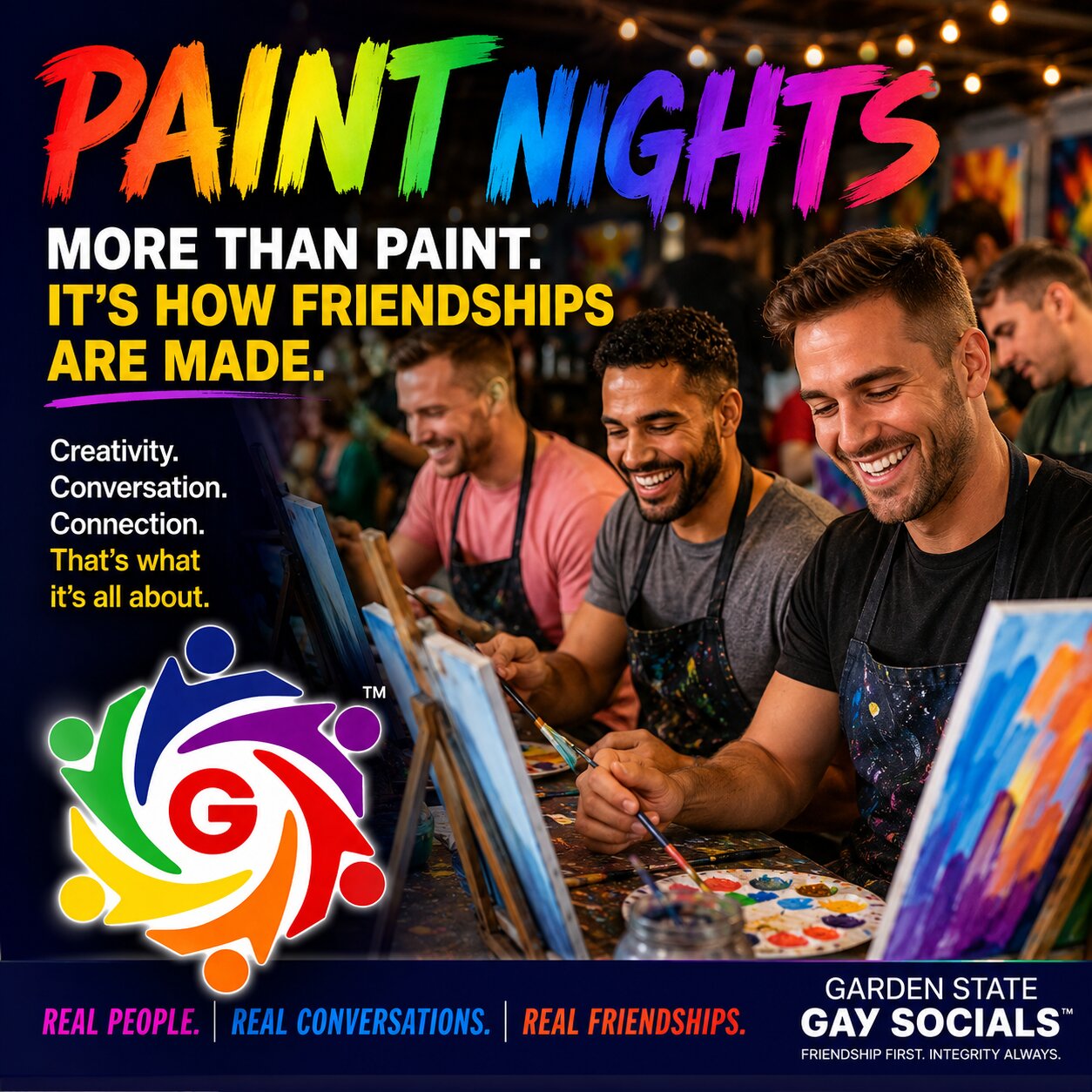
There is a particular moment at the beginning of a paint night when the room still feels undecided. People arrive carrying coats, phones, quiet expectations, and sometimes a little uncertainty about what the evening will become. A few choose their seats immediately, while others pause long enough to study the room before settling in. Some have attended creative events before and arrive ready to begin. Others admit, often with a laugh, that they have not held a paintbrush since childhood and are fully prepared for their canvas to become the most memorable one in the room for all the wrong reasons. Blank surfaces wait on easels, brushes rest beside carefully arranged palettes, and for a few minutes, everyone is surrounded by possibility without yet knowing what will emerge from it.
Then the instructor begins.
A few colors are introduced, the first shapes appear, and something subtle begins to change long before the painting itself takes form. The uncertainty that filled the room only moments earlier gives way to curiosity. Someone asks a question about color. Another person laughs after making an unexpected brushstroke. A participant glances at the canvas beside him and offers a compliment that leads to an introduction, which becomes a conversation, which soon expands into travel, work, favorite restaurants, local towns, and stories that have very little to do with painting. The creative process becomes more than an activity confined to the room. It becomes the shared language that allows the room to relax.
That transformation is one of the reasons paint nights have become such compelling social experiences. People may register because they are curious about painting, interested in trying something different, or simply looking for an enjoyable evening outside the usual routine. What they often remember afterward, however, is not the precision of every brushstroke or whether their finished canvas matched the instructor's example. They remember who sat beside them, what made everyone laugh, and how surprisingly easy it became to talk with people they had never met before.
The painting becomes a souvenir.
The experience becomes the memory.
That distinction matters because meaningful friendships rarely begin with impressive introductions. They usually begin in far more ordinary ways. Someone asks to borrow a brush. Someone offers help mixing a color. Someone jokes about a tree that looks more like broccoli than anything found in nature. None of those moments appears important while it is happening, yet together they create familiarity, and familiarity is often the first quiet step toward trust.
Modern life has made communication nearly constant, while genuine conversation has become increasingly difficult to find. Adults spend their days answering messages, responding to email, attending meetings, managing responsibilities, and moving quickly between one obligation and the next. Information is exchanged throughout the day, but the kind of relaxed conversation that allows people to discover one another gradually has become far less common. Many people remain connected to hundreds of contacts while still feeling that opportunities for real friendship are surprisingly limited.
The challenge is not that adults have forgotten how to talk. It is that the environments where conversation once developed naturally have largely disappeared. During childhood, school fostered repeated interactions. Students sat in the same classrooms, joined the same activities, worked on projects, attended games, and passed one another in hallways every day. In college, friendships grew through classes, clubs, residence halls, late-night conversations, and countless ordinary moments that came from sharing the same place at the same stage of life. Early careers often continued that rhythm by placing coworkers together day after day until professional familiarity sometimes became genuine friendship.
Adulthood gradually changes those conditions. Careers become more demanding. Friends relocate. Family responsibilities grow. Free weekends become more difficult to coordinate. Meeting new people no longer happens automatically because the repeated encounters that once supported friendship are no longer built into everyday life. People must now choose environments where those encounters can happen again. That choice becomes especially important for anyone who wants a connection without the pressure that often accompanies traditional social settings.
For many gay men, the search for those environments carries an additional challenge. Dating applications have created countless opportunities for people to meet, but they are often built around immediate expectations, quick decisions, and conversations that may begin with romance rather than friendship. Bars and nightlife venues can be enjoyable, yet loud music and crowded rooms do not always make it easy to have thoughtful conversations. Large festivals and celebrations bring extraordinary energy, but brief introductions among hundreds of people rarely allow familiarity to develop.
Paint nights offer something different by removing the expectation that conversation must carry the entire evening. People do not have to perform socially or search for the perfect opening question. The activity provides a natural beginning, and once that beginning exists, conversation can move wherever curiosity takes it. A question about a color may become a discussion about art. A discussion about art may become a travel story. Travel may lead to favorite places in New Jersey, memorable restaurants, hiking trails, museums, or future experiences everyone would like to try.
The conversation does not feel planned because it is not.
It grows out of what people are doing together.
That is one of the most powerful qualities of shared creative experiences. They shift attention away from self-consciousness and toward participation. Instead of wondering whether they are saying the right thing, people become involved in the moment. They notice what is happening around them, respond naturally, and gradually reveal their personalities without feeling evaluated.
Painting is especially well-suited to this kind of interaction because there is no single correct way to experience it. The instructor may guide everyone through the same subject, yet each canvas develops its own character. One participant uses brighter colors. Another adds details that were never suggested. Someone follows every step carefully, while someone else experiments and discovers a completely different result. The variety becomes part of the enjoyment, and the room begins encouraging individuality without competition.
That matters because one of the greatest misconceptions about paint nights is the belief that artistic talent determines who belongs. In reality, skill is almost irrelevant. Most participants arrive with little or no formal experience, and many are surprised by what they can create when the process is broken down into manageable steps. The evening is not designed to judge ability. It is designed to make participation easy.
Once perfection is removed from the experience, curiosity takes its place. People become more willing to experiment, more comfortable laughing at mistakes, and more open to encouraging those around them. The social atmosphere becomes warmer because nobody is trying to establish superiority. Everyone begins with the same opportunity to create something personal, and that shared starting point creates an unusual sense of equality.
Friendship often begins the same way.
Nobody arrives with years of history already in place. People begin with introductions, small observations, and brief conversations that gradually accumulate into something more meaningful. One enjoyable interaction creates the possibility of another. One event leads to a familiar face at the next. A name that was difficult to remember becomes someone people are genuinely happy to see again.
The strength of a paint night is not that it creates instant lifelong friendships. No event can promise that. Its strength is that it creates the conditions where friendship can begin honestly, without pressure and without requiring anyone to become someone they are not. It offers a shared experience rich enough to support conversation yet relaxed enough to let each person participate at their own pace.
That balance is increasingly valuable because adults do not simply need more places to go. They need more places where connections can grow.
A paint night offers exactly that kind of place. It brings people together around creativity, gives them a reason to remain present, and allows conversation to emerge naturally while everyone is engaged in something memorable. By the end of the evening, the canvases may all look different, but the experience has given everyone something in common.
And sometimes that is all friendship needs to begin.
Psychologists have spent decades studying the conditions that allow friendships to develop, and one conclusion continues to hold across age, background, and culture. Strong relationships are rarely built through conversation alone. They grow through repeated positive experiences that gradually build trust. Shared activities reduce uncertainty, encourage cooperation, and give people opportunities to reveal themselves naturally rather than feeling they must present a carefully prepared version of who they are.
Paint nights reflect this principle almost perfectly.
Rather than asking participants to sit across from one another, expecting conversation alone to sustain an entire evening, painting provides a comfortable rhythm that quietly carries everyone forward. People focus on the next brushstroke, pause to admire someone else's work, laugh when colors blend in unexpected ways, and exchange small observations that soon become larger conversations. Nobody is assigned the responsibility of keeping the discussion alive because the experience itself continually creates new opportunities for interaction.
That subtle difference changes the entire atmosphere.
Many adults quietly worry about making the right first impression when meeting someone new. They wonder whether they are talking too much, asking enough questions, or being interesting enough to keep the conversation going. Those concerns often fade during creative activities because attention shifts from personal performance to shared participation. The room fills with curiosity rather than self-consciousness, allowing personalities to emerge far more naturally than they often do in environments built entirely around conversation.
Researchers frequently describe this phenomenon as reducing cognitive load. When people become engaged in an enjoyable activity, they spend less energy monitoring every word they say and more energy responding authentically to the people around them. Conversations begin feeling less like interviews and more like discoveries. Questions arise because people become genuinely interested in one another rather than because they feel obligated to avoid awkward silence.
That difference is easy to observe during almost every successful paint night.
Someone notices another participant adding details that were never part of the original design and compliments their creativity. A discussion begins about photography, architecture, or travel. Someone else shares that they recently visited Cape May, Princeton, or Lambertville and recommends a favorite restaurant discovered during the trip. Another person mentions hiking through Ramapo Mountain State Forest, exploring Duke Farms, or spending an afternoon wandering Grounds For Sculpture. Before long, the painting itself has become only one part of a much larger conversation built around experiences, interests, and memories.
These conversations rarely feel forced because they were never intended to follow a script.
Instead, they develop the way most meaningful friendships have always developed through shared experiences that quietly create opportunities for people to know one another a little better with every passing hour.
Another fascinating aspect of creative activities is their ability to welcome people with dramatically different personalities. Outgoing individuals naturally enjoy introducing themselves and engaging with everyone in the room. At the same time, quieter participants often appreciate an activity that allows conversation to develop gradually rather than immediately becoming the center of attention. Neither personality has an advantage, because painting creates space for both styles of interaction to coexist comfortably.
For people attending alone, this can be especially reassuring.
Walking into any unfamiliar gathering can produce understandable hesitation. Many people wonder whether everyone else already knows one another or whether arriving alone will somehow make the experience uncomfortable. Paint nights quietly remove much of that uncertainty because nearly everyone quickly focuses on the same activity. Conversation develops around the tables rather than through formal introductions, making it much easier for newcomers to become part of the group without feeling they must insert themselves into ongoing conversations.
Perhaps that is why so many people leave creative gatherings feeling far more connected than they expected when they first walked in.
They did not simply meet people.
They shared an experience with them.
Those experiences matter because emotional memories often last much longer than factual ones. Years from now, most participants probably will not remember exactly how many shades of blue they mixed or precisely where every brushstroke landed on the canvas. They are far more likely to remember laughing with someone they had just met, discovering a shared interest in local restaurants or weekend travel, or realizing that an evening they almost skipped became one of the most enjoyable nights they had experienced in quite some time.
That is how communities quietly begin growing.
Not through extraordinary moments that happen once.
Through ordinary experiences repeated consistently enough that strangers gradually become familiar faces, familiar faces become friends, and friends begin creating traditions together.
Throughout New Jersey, there is certainly no shortage of places worth exploring. The state offers remarkable diversity within relatively short driving distances, making it possible to enjoy mountains, lakes, charming downtown districts, museums, theaters, botanical gardens, historic villages, waterfront promenades, wineries, and coastal communities all within a single season. Yet destinations alone rarely create community. Community develops because people experience those places together.
Creative experiences add another dimension to that journey.
Rather than observing something together, participants actively create something together. Every completed painting becomes unique because each person brings different ideas, perspectives, and personalities to the canvas. The artwork reflects individuality, yet the experience itself creates something shared.
Perhaps that is one reason creativity has always played such an important role throughout human history.
Long before people recorded memories with photographs or shared experiences online, they expressed themselves through art, storytelling, music, and craftsmanship. Creative expression has always been one of humanity's most universal languages because it allows people to communicate something that words alone often cannot fully capture.
Paint nights continue that tradition in a thoroughly modern way.
They remind people that creativity belongs to everyone, not only professional artists.
More importantly, they remind people that meaningful friendships rarely require extraordinary talent.
They require opportunities to spend time together, remain curious about one another, and continue saying yes to experiences that make genuine conversation possible.
The finished painting may eventually hang on a wall, rest on a shelf, or become a thoughtful reminder of one enjoyable evening.
The friendship that began while creating it may become something far more valuable.
One of the greatest misunderstandings about friendship is the belief that it arrives all at once.
People often imagine lasting friendships beginning with an unforgettable conversation or an immediate realization that they have met someone special. While those moments certainly happen, they are surprisingly uncommon. Most meaningful relationships develop so gradually that people struggle to identify exactly when an acquaintance became a friend. Looking back years later, they remember dozens of small moments rather than one dramatic turning point. They remember laughing over dinner after a local event, exploring a museum together on a rainy Saturday, walking side by side along a wooded trail, or discovering a favorite restaurant that became the meeting place for future gatherings.
Friendship grows through repetition.
Every positive experience quietly strengthens the one before it. Trust develops because people continue showing up. Familiarity replaces uncertainty. Conversations become easier because everyone already shares a growing collection of memories. What once felt unfamiliar slowly becomes comfortable, and before long, people begin looking forward to seeing familiar faces rather than wondering whether they will fit in.
Paint nights fit naturally into that progression.
Someone who first meets another participant while painting may reconnect several weeks later during breakfast. That breakfast may lead to a scenic hike through northern New Jersey, followed by a bowling night, a day trip, or another creative activity months later. Each experience adds another chapter to a friendship that was never forced into existence. Instead, it was allowed to grow at its own pace through shared experiences that made conversation feel effortless.
Researchers sometimes describe this process as the mere exposure effect, the observation that people generally become more comfortable with individuals they encounter repeatedly in positive environments. Familiarity alone does not create friendship, but repeated enjoyable experiences significantly increase the likelihood that trust, comfort, and genuine affection will develop over time. The principle is remarkably simple, yet it explains why communities built around recurring activities often become far stronger than those centered upon isolated events.
For many adults, particularly those balancing demanding careers, family obligations, or changing life circumstances, opportunities for those repeated interactions have become increasingly rare. Schedules fill quickly. Friends move away. Weekends disappear into errands and responsibilities. Before long, months have passed without discovering a new place, meeting someone new, or simply enjoying an afternoon where conversation unfolds without watching the clock.
That reality is one reason intentional communities have become so valuable.
People are not simply searching for something to do.
They are searching for places where they feel welcomed, remembered, and appreciated.
Creative activities contribute beautifully to that goal because they encourage participation without demanding perfection. Nobody expects flawless artwork. Nobody measures success by comparing one canvas with another. Instead, success lies in the willingness to participate, to remain curious, to laugh at unexpected mistakes, and to enjoy spending time with people who are doing the same.
That atmosphere creates something increasingly difficult to find in modern life.
Authenticity.
When people stop worrying about appearing impressive, they begin revealing who they truly are. Conversations become more relaxed because they are no longer performances. Someone shares a favorite vacation destination. Another describes the small town where they grew up. Someone recommends a hidden restaurant in Bergen County, while another talks about discovering a beautiful park in Morris County that deserves far more attention than it receives. Stories begin connecting people in ways that would rarely happen during hurried introductions or crowded social settings.
Perhaps that is why so many participants leave a paint night surprised by how quickly the evening passes.
Time feels different when people are genuinely engaged.
Psychologists sometimes refer to this sensation as flow, a state in which attention becomes fully absorbed in an enjoyable activity. During periods of flow, people often lose track of time because they become completely present in the experience unfolding before them. Painting naturally encourages this state. Participants concentrate on colors, shapes, and techniques while conversation develops comfortably around them. Hours seem shorter because everyone is focused on creating rather than watching the clock.
The result is far more than a completed painting.
It is an evening people genuinely remember.
That philosophy has become one of the guiding principles behind Garden State Gay Socials. Every gathering, whether it involves breakfast, lunch, dinner, hiking, bowling, day trips, Curated Experiences, volunteer opportunities, museums, seasonal celebrations, or creative activities like paint nights, begins with the same objective. The activity itself is important, but it is never the final destination. The greater purpose is creating an environment where genuine friendships can develop naturally through shared experiences, thoughtful conversation, and repeated opportunities to reconnect over time.
That approach reflects an understanding that community cannot be manufactured overnight.
It grows patiently.
One event introduces new faces.
The next event creates recognition.
Several more gatherings create familiarity.
Eventually, people begin greeting one another by name, asking about recent vacations, remembering birthdays, celebrating accomplishments, and supporting one another during life's inevitable challenges. What began as attendance gradually becomes belonging.
There is something profoundly encouraging about recognizing that meaningful friendship does not require extraordinary charisma, artistic talent, or perfectly rehearsed conversation. It asks for something much simpler.
A willingness to show up.
A willingness to remain curious.
A willingness to say yes to experiences that create opportunities for connection.
Paint nights happen to provide those opportunities exceptionally well because creativity removes many of the barriers that often prevent adults from relaxing around people they have just met. Instead of concentrating on making the perfect impression, participants focus on enjoying the process together. Laughter becomes easier. Conversation becomes more genuine. New friendships can begin without unnecessary expectations.
Perhaps that is the greatest lesson a paint night quietly teaches.
Life's most meaningful relationships often begin while our attention is focused somewhere else entirely. We think we are attending to learn something new, enjoy an evening out, or create a painting to bring home. Without realizing it, we are also creating something far more valuable.
We are creating shared memories.
Those memories become stories.
Those stories become traditions.
Those traditions become friendships.
And those friendships eventually become the foundation of a stronger, more welcoming community.
If you are looking for experiences where creativity, conversation, and genuine connection come together naturally, we invite you to explore everything Garden State Gay Socials has to offer throughout the year. From breakfasts and hikes to bowling nights, day trips, Curated Experiences, volunteer opportunities, seasonal gatherings, and creative events, every experience is thoughtfully designed to help gay men throughout New Jersey build authentic friendships in welcoming, low-pressure environments where everyone can be themselves.
Explore our upcoming Events to discover what is coming next and begin your own journey toward meaningful conversations, memorable experiences, and lasting friendships.
Friendship First. Integrity Always.™
Remember to subscribe to our free bi-monthly newsletter, Guys Gay Spectrum™, and stay informed about upcoming events, magazine-style articles, community news, and new opportunities to connect with welcoming people throughout New Jersey and beyond.
Leave A Comment
Please login to add a comment!
Comments (0)