Why More Gay Men Are Choosing Experiences Over Nightlife
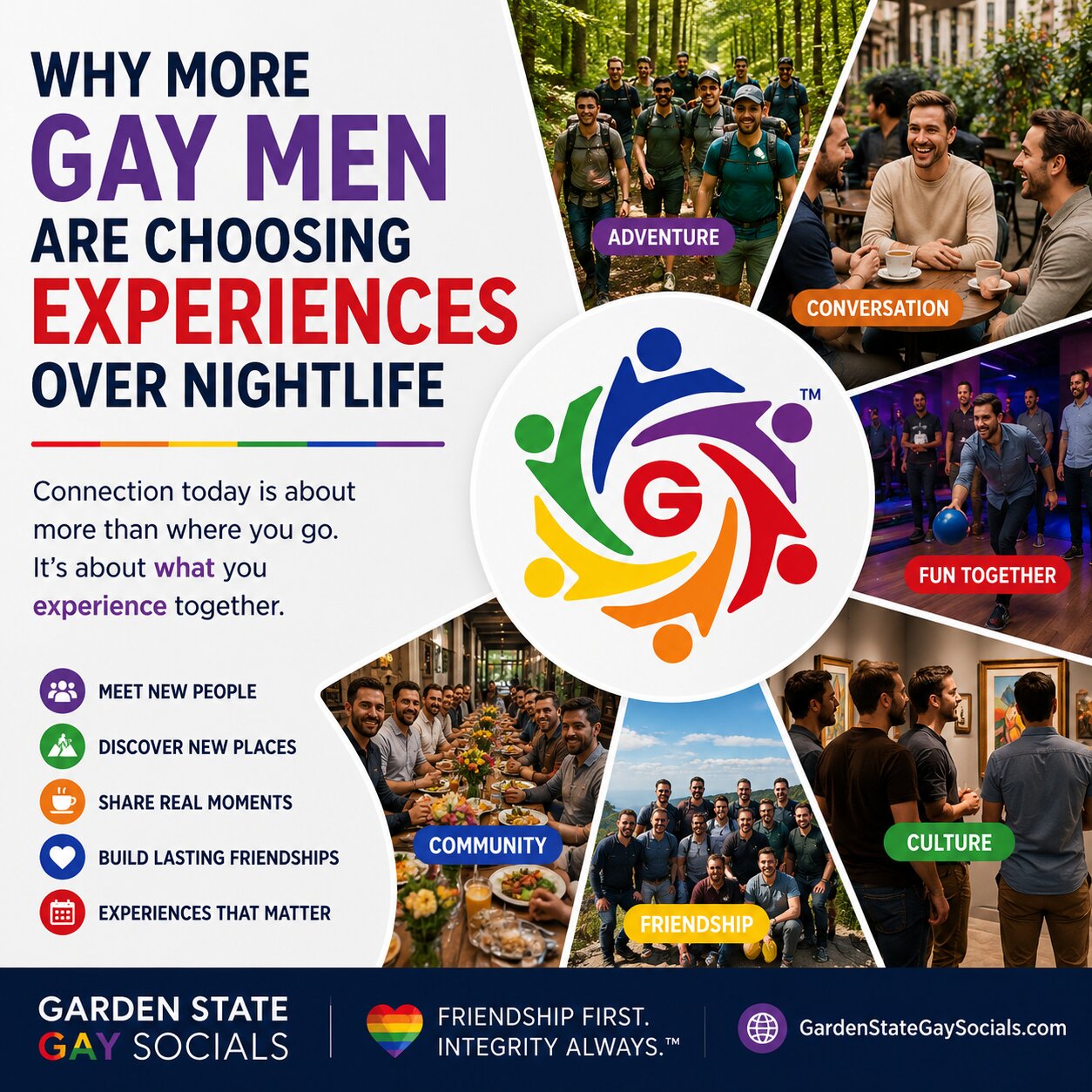
What if the future of the gay community isn't louder nights, but better experiences? For decades, nightlife has been the cornerstone of gay social life. Bars, clubs, and late-night dance floors were more than places to have fun. They were spaces where people found community, expressed identity, formed friendships, and built relationships. In many ways, they functioned as the original social networks for gay men, offering visibility and belonging in a world that often failed to provide either.
But that social model is changing.
Across the country, and especially in places like New Jersey, a growing number of gay men are moving away from traditional nightlife and toward experience-based socializing. Instead of making plans around a bar or club, they are choosing hiking groups, brunch meetups, wellness events, creative workshops, game nights, and curated gatherings that take place during the day or early evening.
This is not a rejection of nightlife in New Jersey. It is a recalibration. It reflects a broader shift toward connection that feels more intentional, more sustainable, and more aligned with the way people want to live now. At the center of that shift is a deeper question about what community really means in 2026.
For many years, New Jersey nightlife was the default answer to that question. If you wanted to meet people, go out. If you wanted to make friends, go to the club. If you wanted to be seen, show up at the bar. That model worked for a long time because it filled a real need. It gave people access to one another in a world that was often hostile, restrictive, or isolating. Gay nightlife was not only entertainment. It was refuge, expression, and connection all at once.
Today, however, many people are rethinking what they actually want from social life. The old model still has value, but it is no longer the only one, and for some people it is not even the best.
One reason for this shift is burnout. Many gay men, especially those in their late twenties, thirties, and beyond, have outgrown the routine of late nights, crowded rooms, loud music, and alcohol-centered interaction. What once felt exciting can begin to feel repetitive, draining, and disconnected from the life they want to build. The energy that used to feel liberating can eventually start to feel exhausting.
Another reason is that nightlife has limits when it comes to real connection. In a loud bar or club, conversation is often brief, fragmented, and shallow. People make fast judgments based on appearance, vibe, or immediate chemistry. There is nothing inherently wrong with that, but it does not always create the kind of connection people are looking for today. It can be fun, but it can also be fleeting. Many people are finding that they want something deeper than a passing interaction in a crowded room.
Health and wellness in New Jersey and beyond also play a major role in this shift. More people are prioritizing sleep, fitness, mental clarity, and routines that support long-term well-being. A lifestyle built around staying out until two in the morning does not always fit with those goals. As wellness becomes more central to daily life, social habits are changing too. People are asking not just where they can go, but what kind of experience will leave them feeling better afterward.
Digital life has also changed the social landscape. Apps like Grindr, Tinder, and Instagram have made it easier than ever to meet people, but easier does not always mean deeper. These platforms can create access, but they do not necessarily create substance. They can introduce people, but they do not always help them build real trust, comfort, or community. In a world where connection is available on a screen at any moment, people are increasingly craving experiences that happen in real life and feel grounded in something shared.
That is where experience-based socializing comes in.
Experience-based socializing is exactly what it sounds like. It is the practice of connecting with others through shared activities rather than solely through shared environments. Instead of asking where everyone should go out, the question becomes what people should do together. That simple change transforms the entire experience because people begin focusing less on where they are and more on who they're sharing it with.
When people gather around an activity, social pressure tends to decrease. There is a natural structure to the interaction. Whether it is a hike, a cooking class, a bowling night, a museum visit, or a themed social event, the activity gives people something to focus on besides themselves. That makes conversation flow more easily. It gives people a reason to talk, laugh, compare experiences, and discover common ground without the awkwardness that sometimes comes with a purely unstructured social setting.
It also tends to attract people with aligned interests. Someone who joins a fitness group is likely interested in health and movement. Someone who attends a brunch meetup probably values conversation and relaxed social energy. Someone who joins a creative workshop may be looking for expression, inspiration, or community with other thoughtful people. The result is that people are not just meeting random strangers. They are meeting others who already share at least one point of connection.
That matters because context creates connection.
I've seen this firsthand. After one of our events, several of us walked out to the parking lot expecting to say goodbye. Instead, we stood there talking for well over an hour. Nobody was in a hurry to leave. The restaurant had closed, the event was technically over, yet the conversations kept going. We talked about careers, family, travel, life experiences, and the dreams we still hoped to accomplish. It reminded me that while people may register for an activity, they often return because of the people they meet.
That wasn't the first time I'd seen it happen, and I don't think it will be the last. The activity brought us together, but the conversations kept us there.
For gay men specifically, this shift carries extra meaning. Social spaces have always held a larger cultural role in gay life than in many other communities. Bars and clubs were not just places to socialize. They were often the only places where people could feel fully visible, accepted, and free. They provided the opportunity to exist publicly and openly in a world that had often demanded silence or concealment. That history is powerful, and it should not be forgotten.
But history is not the same thing as limitation. Moving beyond nightlife does not mean rejecting the spaces that helped build the community. It means expanding the definition of what community can be. Today, gay men have more freedom to create social environments that reflect the variety of their lives, personalities, and priorities. Not everyone thrives in high-energy nightlife spaces. Some people are introverted. Some are professionals with demanding schedules. Some are focused on fitness, creativity, or wellness. Some want a social environment where they can actually hear the person next to them.
Experience-based gatherings make room for that diversity.
They also support the kinds of emotional outcomes that many people are seeking now. More and more people want deeper friendships rather than surface-level interactions. They want shared growth rather than a temporary escape. They want authenticity instead of performance. These are not small preferences. They reflect a meaningful change in how people define a good social life.
A big part of this change is the increasing emphasis on wellness and intentional living. Wellness is no longer limited to exercise. It includes sleep, nutrition, mental health, emotional balance, and the overall quality of one’s daily life. As people become more intentional about their routines, they also become more intentional about their social choices. They want experiences that add value rather than take it away.
This is why daytime and early evening events are becoming more appealing. A morning hike followed by coffee feels different from a late night out. A group workout creates a shared sense of accomplishment. A meditation session or mindfulness event supports emotional grounding. A creative activity, such as writing, photography, or art, offers both connection and personal enrichment. These experiences do more than fill time. They enhance life.
That is an important distinction. The point is not simply to avoid nightlife. The point is to move from escape to enhancement. Instead of socializing in ways that leave people depleted, many are choosing experiences that leave them restored.
Another important difference between nightlife and experience-based socializing is the nature of the connection itself. Nightlife often rewards quick impressions. People are judged rapidly based on style, physical appearance, charisma, or immediate attraction. That can be exciting, but it can also be limiting. People may leave with a phone number or a short conversation, but not much else.
Experiences slow that process down. When you spend two hours on a hike, attend a workshop, or participate in a group outing, you see people more fully. You observe how they interact with others, handle small challenges, communicate, and show up in a shared environment. That creates a fuller picture of who they are.
It also reduces the pressure to perform. In a structured activity, people can relax more naturally. They do not need to force conversation or maintain a certain image the entire time. They can participate. That often leads to more genuine interaction and, over time, more meaningful relationships.
In today’s digital world, shared experiences also carry a different kind of value. They become memories that people want to revisit and talk about. A scenic trail, a group brunch, a day trip, or a creative event creates moments people can actually remember. These are not just social outings. They are stories. They become the things friends reference later, the inside jokes that develop naturally, and the experiences that make a group feel like a real community.
This is part of why experience-based events are so effective for content creators and community builders. They are naturally visual, authentic, and relatable. They generate material that feels real rather than staged. They capture people enjoying themselves in a way that is easy to share and easy to understand. That makes them especially valuable in a world where content often feels overly polished or disconnected from everyday life.
For communities in New Jersey, this shift has already started to take shape through initiatives like Garden State Gay Socials. Rather than centering everything around nightlife, it focuses on intentional gatherings that create space for real connection. The goal is not simply to get people in a room. The goal is to create an environment where connection can actually happen.
That might mean a relaxed mixer in a conversation-friendly setting. It might mean an outdoor hike or park meetup. It might mean a wellness event, a brunch, a game night, or a themed activity that encourages people to interact more naturally. What sets this approach apart is that it recognizes that different people need different social environments. Not everyone drinks. Not everyone likes loud spaces. Not everyone wants to stay out late. By offering alternatives, it expands the definition of what it means to go out.
That expansion matters because many people still want to meet new people, but they do not always feel at home in traditional nightlife scenes. They may want a connection without pressure. They may want to socialize without chaos. They may want activities that create enough structure to make interaction easier, but enough openness to allow real conversation. Experience-based events are well-suited to that need.
They also help build something deeper over time. Real community is not built through a single successful event. It is built through repetition, familiarity, and trust. When people show up regularly, they begin to recognize each other. They start to feel more comfortable. Conversations become easier. New friendships begin to form. A group starts to feel less like a one-time gathering and more like a living social network.
That consistency is one of the strongest advantages of experience-based communities. They create a rhythm. People know there will be other opportunities to connect. That lowers the pressure on any one event and makes the entire environment feel more welcoming. Instead of worrying whether they will fit in right away, people begin to trust that they can return, reconnect, and keep building relationships over time.
In a fragmented world, that kind of structure matters more than ever. Many people today feel socially connected on paper but isolated in reality. Social media creates the appearance of community without always delivering depth. Apps can make meeting people easier, but they often fail to create meaningful follow-through. Nightlife can bring people together, but not always into the same emotional space.
Experience-based communities help bridge that gap.
They offer something many people are missing: repeated, low-pressure, meaningful contact with others who share similar values or interests. That is how belonging is built. Not all at once. Not through performance. But through regular, genuine interaction that slowly turns acquaintances into friends and friends into a community.
This is especially important for gay men because the need for community has always been about more than entertainment. It has been about safety, recognition, and support. That is still true now, even as the landscape changes. The difference is that the spaces creating that support are becoming more varied. They are no longer limited to nightlife. They can exist in parks, coffee shops, wellness studios, creative spaces, and day events that bring people together in a more grounded way.
There is also a generational dimension to this shift. Younger gay men may already feel less attached to the idea that nightlife is the primary path to social life. Older gay men may be more interested in social spaces that fit with their current stage of life, work demands, or wellness goals. Across age groups, there is a growing desire for connection that feels sustainable rather than exhausting. That overlap creates an opening for new kinds of community spaces to grow.
The future of gay social life may not be about choosing between nightlife and experience-based events. It may be about allowing both to exist, but with different roles. Nightlife can remain a source of fun, expression, and celebration. Experience-based socializing can serve as a space for connection, growth, and everyday belonging. Together, they create a more complete social ecosystem.
That is a much healthier model than relying on one type of space to do everything.
It is also a more realistic reflection of how people live now. Life is busy. Schedules are full. Priorities have changed. People want social opportunities that fit into their lives without requiring them to sacrifice their health, energy, or peace of mind. They want a connection that feels natural, not forced. They want a community that supports who they are becoming, not just who they have been told to be.
In that sense, the move toward experience-based socializing is not a trend in the superficial sense. It is a cultural adjustment. It reflects changing values, changing lifestyles, and changing definitions of what it means to belong. It says that community can be built through movement, conversation, creativity, and shared effort. It says that people can connect while doing something meaningful together. It says that fun does not have to come at the expense of wellness.
It also says something important about the future of gay life. The next chapter does not need to look exactly like the last one to be valid. Bars and clubs played a crucial role in creating visibility and freedom. That legacy deserves respect. But communities evolve. They grow when they adapt. They stay alive when they make room for new forms of connection.
As Garden State Gay Socials continues to grow, I don't just envision more events. I envision more experiences. Imagine learning to prepare desserts from a professional chef in a private kitchen, taking a curated helicopter trip into New York, followed by dinner, exploring museums together, discovering hidden towns throughout New Jersey, or spending an afternoon on a scenic day trip. The activity may be different each time, but the goal will always remain the same: creating an environment where genuine friendships can grow.
That is what makes this moment significant. Gay men are not stepping away from the community. They are redefining it. They are choosing spaces that feel more authentic to the lives they actually live. They are building friendships in settings that encourage presence instead of performance. They are creating a model of social life that is less about being seen and more about being known.
Ultimately, that may be the most meaningful shift of all.
Going out no longer has to mean loud music, crowded rooms, and late nights. It can mean meeting new people on a scenic trail, sharing stories over brunch, taking part in a creative workshop, joining a wellness event, or simply spending time with people who make life feel more connected. It can mean building relationships that last beyond one evening. It can mean making space for joy that is calm, steady, and real.
Things to do in New Jersey and Beyond
At its core, community is not about the venue. It is about the connection. And increasingly, gay men are choosing experiences that help create exactly that.
Leave A Comment
Please login to add a comment!
Comments (0)