How to Find Gay Events in New Jersey That Actually Lead to Real Connection
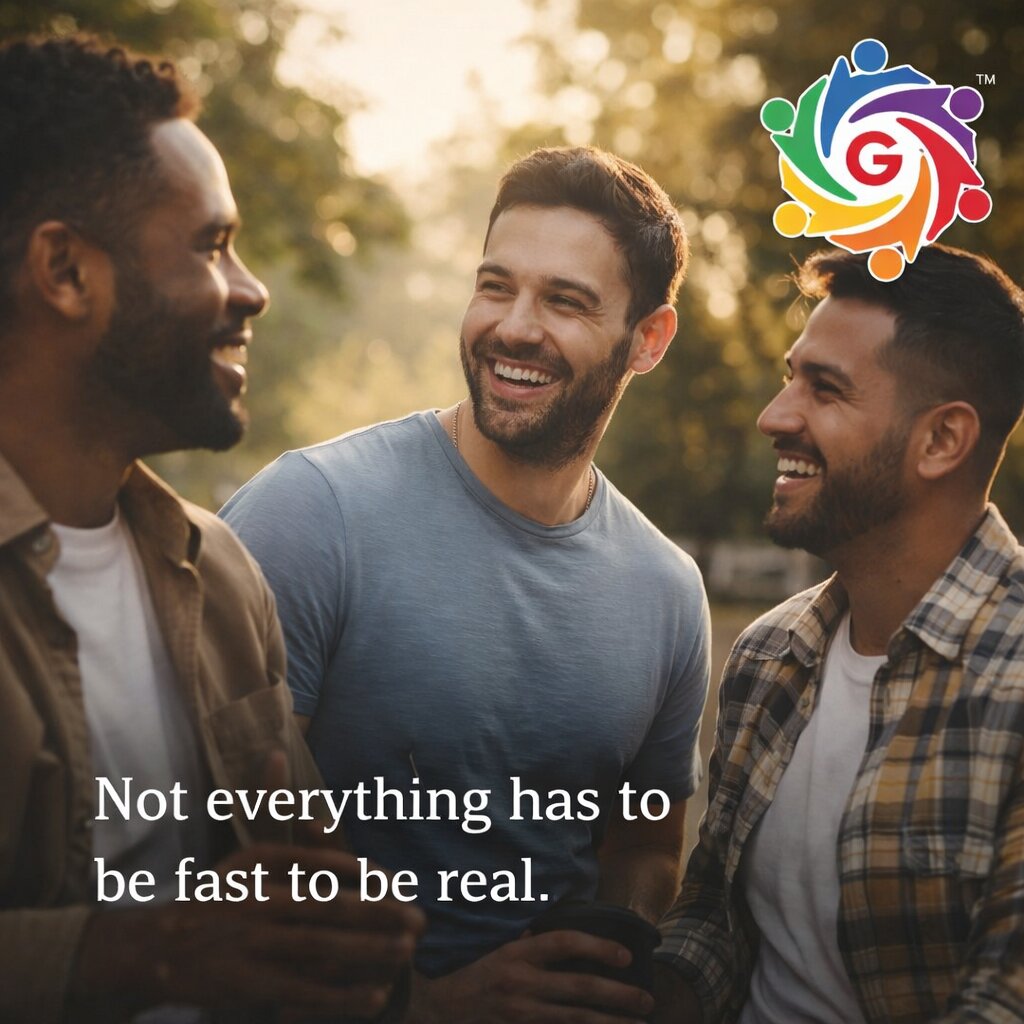
Finding a real connection as a gay man in New Jersey is not as easy as it seems, even though there are more options available than ever before. Apps, nightlife, and social platforms all promise opportunities to meet people, yet many men find themselves going through the same cycle over and over again. They meet someone briefly, have a short conversation, maybe exchange a few words or numbers, and then it fades without leading anywhere meaningful.
The problem is not a lack of access to other people. The problem is the structure of the environments where those interactions take place.
Most traditional social spaces are designed for movement rather than connection. They are built around speed, energy, and constant interaction. While that can create excitement, it rarely creates depth. Conversations are often brief, surface-level, and easily interrupted. There is always something else happening, another person to meet, another moment pulling attention away. Over time, this creates a pattern in which people constantly interact but rarely connect.
This is why more men are beginning to rethink what they actually want from social experiences. Instead of focusing on how many people they can meet, they are starting to focus on how those interactions feel and whether they lead to anything lasting. That shift changes how they evaluate their options and where they choose to spend their time.
When you begin looking for gay events in New Jersey with the intention of building a real connection, the criteria change. You start paying attention to the event's structure, pacing, environment, and how people interact within that space. You begin to recognize that not all social settings are designed to produce the same outcome.
One of the most important distinctions to understand is the difference between interaction and connection. Interaction can happen anywhere. It requires very little structure and often occurs naturally in high-energy environments. Connection, however, requires something more intentional. It needs time, space, and an environment where people feel comfortable enough to engage beyond the surface.
Without those conditions, interactions tend to remain temporary. They serve as moments of engagement rather than building blocks for something more meaningful.
Many traditional environments unintentionally work against this process. They encourage people to keep moving, to stay light in conversation, and to avoid going too deep too quickly. While this keeps the energy high, it prevents interactions from developing into something more substantial. Over time, this can lead to frustration, especially for those seeking more than just passing encounters.
A different approach begins by choosing environments that are intentionally designed to support connection rather than speed. Smaller group settings are one of the most effective ways to create this type of experience. In a smaller group, everything changes. The noise level drops, distractions decrease, and there is more room for conversation to develop naturally.
Instead of trying to meet as many people as possible, the focus shifts to getting to know the people who are there. Conversations last longer. There is more opportunity to listen and respond. People are not constantly being pulled away, which allows interactions to build in a more meaningful way.
This creates familiarity, and familiarity is one of the most important elements in developing connection.
Another key factor is whether the event includes a shared experience. When people are simply standing around trying to talk, there is often pressure to initiate and maintain conversation. This can feel forced, especially at the beginning. Even confident individuals can find themselves overthinking what to say or how to engage.
When there is a shared activity, that pressure is reduced significantly. Whether it is a hike, a breakfast, a structured outing, or a day trip, the experience itself becomes part of the interaction. People naturally comment on what is happening, react to shared moments, and engage without needing to force conversation.
This is one of the most effective ways to meet gay men in New Jersey in a way that feels natural rather than staged. Instead of trying to create conversation out of nothing, people respond to the environment around them. This makes interactions feel more authentic and less pressured, increasing the likelihood of a real connection forming.
Consistency is another critical component that is often overlooked. Many people approach social experiences as one-time opportunities. They attend an event expecting something meaningful to happen immediately. When it does not, they move on or assume that the environment was not right.
In reality, connection rarely works that way.
It develops over time through repeated interaction. When events are part of a consistent structure, people begin to recognize each other. Conversations continue from where they left off. There is a sense of continuity that builds with each experience.
This is where the connection starts to deepen.
The second time you attend, you feel more comfortable. The third time, you begin to recognize familiar faces. By the fourth or fifth time, interactions begin to feel natural rather than new. This progression is what turns casual encounters into meaningful relationships.
Another important aspect of this process is the emotional tone of the environment. People are highly responsive to how a space feels, even if they are not consciously aware of it. If an environment feels rushed, competitive, or unpredictable, individuals tend to become more guarded. They engage, but they hold back.
In contrast, environments that feel calm, respectful, and intentional encourage openness. People feel more at ease, which makes it easier to engage in meaningful conversation. This emotional tone plays a significant role in determining whether interactions remain surface-level or deepen.
As you begin to recognize these patterns, your approach to social experiences changes. You move away from simply attending events and begin to choose environments more intentionally. You become more aware of what works for you and what does not.
This shift removes much of the frustration that comes from repeating the same experiences without seeing different results. Instead of hoping something will happen, you place yourself in environments where meaningful interaction is more likely.
Over time, this leads to better outcomes.
Conversations become more engaging. Interactions feel more natural. Relationships begin to form in a way that feels organic rather than forced. This creates a sense of momentum that builds with each experience.
One of the most significant changes that occurs during this process is the transition from searching to selecting. In the beginning, people often explore a wide range of options, trying different environments to see what fits. This stage is important because it provides contrast and helps identify what works.
Eventually, however, the approach becomes more focused. Instead of searching broadly, you begin selecting specific environments that align with your goals. You recognize the value of consistency and begin to invest your time in experiences that support connection.
For many men, this is where gay events in New Jersey start to feel different. They are no longer just another option among many. They become part of a larger experience that supports ongoing interaction and relationship building.
Another important realization is that connection does not require immediate results. There is often pressure to make something happen quickly, to turn a single interaction into something more. This pressure can actually work against the process, making interactions feel forced.
When you remove that pressure, the experience changes. You are no longer evaluating every conversation for its outcome. Instead, you allow interactions to develop naturally. This creates space for authenticity, which is essential for real connection.
Over time, this approach leads to stronger and more stable relationships.
The focus shifts from individual interactions to the overall experience. Instead of thinking about who you met at a single event, you begin to think about the connections that are developing over time. You recognize familiar faces, continue conversations, and build a sense of continuity.
This is how connection turns into community.
Community is not created through isolated interactions. It is built through repeated experiences, shared moments, and consistent engagement. When people return to the same environment, they contribute to a growing network of relationships that extend beyond any single event.
At this point, the experience changes fundamentally.
You are no longer just attending events. You are part of something ongoing.
A sense of belonging develops, making the experience more meaningful. It is not about finding the perfect interaction. It is about being part of an environment where connection can develop naturally over time.
For those looking for a different approach, exploring gay events in New Jersey designed around these principles can lead to a very different outcome. It is not about doing more or trying harder. It is about choosing environments that align with how connection actually works.
When the environment is right, everything else becomes easier. Conversations flow more naturally. People feel more comfortable. There is less pressure to perform and more opportunity to engage.
Over time, this creates a sense of continuity that extends beyond individual experiences. Familiar interactions turn into meaningful relationships. Those relationships create a sense of belonging that cannot be replicated in environments that are not designed for it.
That is the difference between interaction and connection.
And once you experience that difference, it becomes clear why the environment you choose matters more than anything else.
The Difference Between Trying and Allowing
One of the most subtle but important shifts that happens over time is the difference between trying to create connection and allowing it to happen.
In many traditional environments, there is an underlying pressure to make something happen. People feel like they need to say the right thing, present themselves a certain way, or move a conversation in a specific direction. Even when interactions go well, there is often a sense of effort behind them.
This effort is not always visible, but it is felt.
It shows up in hesitation, in overthinking, and in the feeling that each interaction carries more weight than it should. When people are trying too hard to create connection, it can actually make the experience feel less natural.
In contrast, environments that support real connection reduce the need to try.
They create conditions where interaction can unfold without being forced. Conversations begin more easily because there is less pressure attached to them. People are not focused on outcomes. They are focused on being present in the moment.
This shift from trying to allowing is what makes connection feel effortless.
It is not that people stop caring. It is that they stop forcing something that needs time to develop. When that pressure is removed, interactions become more genuine, and the experience becomes more enjoyable.
Why Pace Matters More Than Most People Realize
Pace is one of the most overlooked elements of any social experience.
In fast-paced environments, everything happens quickly. Conversations start and end within minutes. People move constantly, and there is little opportunity to stay engaged in one interaction for long. While this creates energy, it limits depth.
Slower-paced environments create a different experience.
They allow conversations to breathe. There is time to listen, respond, and explore topics without feeling rushed. This leads to more meaningful interaction, even if fewer people are involved.
The goal is not to meet as many people as possible.
The goal is to have interactions that actually matter.
When pace slows down, people naturally go deeper. They are more attentive, more thoughtful, and more engaged. This creates a stronger foundation for connection, which is something that cannot be replicated in faster environments.
Building Confidence Through Familiar Experience
Confidence in social settings does not come from forcing yourself into more situations. It comes from becoming familiar with environments that feel aligned with you.
When you repeatedly attend spaces that are structured in a way that supports connection, your comfort level increases. You understand how the environment works. You know what to expect. You recognize faces and begin to feel part of the flow.
This familiarity reduces uncertainty, and with less uncertainty comes more confidence.
Instead of questioning how to engage, you begin to engage naturally. Conversations feel easier. You are less concerned with how you are being perceived and more focused on the interaction itself.
Over time, this creates a positive cycle.
The more comfortable you feel, the more you engage. The more you engage, the more familiar the environment becomes. This reinforces confidence and makes each experience more enjoyable than the last.
The Long-Term Value of the Right Environment
It is easy to evaluate social experiences based on what happens in a single moment. Did you meet someone interesting? Did you have a good conversation? Did anything stand out?
While these are valid questions, they do not capture the full value of an environment.
The real value is in what develops over time.
An environment that consistently supports connection creates opportunities that extend beyond individual interactions. It allows relationships to form gradually. It provides a space where people can return, reconnect, and continue building something that feels natural.
This long-term perspective changes how you evaluate your experiences.
Instead of focusing on immediate results, you begin to recognize the importance of consistency. You see how small interactions build into something larger. You understand that connection is not a single event, but a process.
A More Sustainable Way to Connect
For many men, the biggest realization is that connection does not need to feel exhausting.
It does not need to involve constant effort, repeated disappointment, or the feeling of starting over every time. When the environment is right, connection becomes something that develops naturally.
It becomes sustainable.
You are not constantly searching for the next opportunity. You are participating in something that continues to evolve. This removes a significant amount of pressure and makes the experience more enjoyable overall.
Instead of feeling like you are navigating a system that does not work for you, you begin to feel aligned with the process itself.
And when that alignment is in place, everything changes.
Interactions feel more genuine.
Experiences feel more meaningful.
And connection becomes something that grows over time rather than something you chase.
Leave A Comment
Please login to add a comment!
Comments (0)