Ghosting Is Not Fun: Why Respect and Communication Still Matter
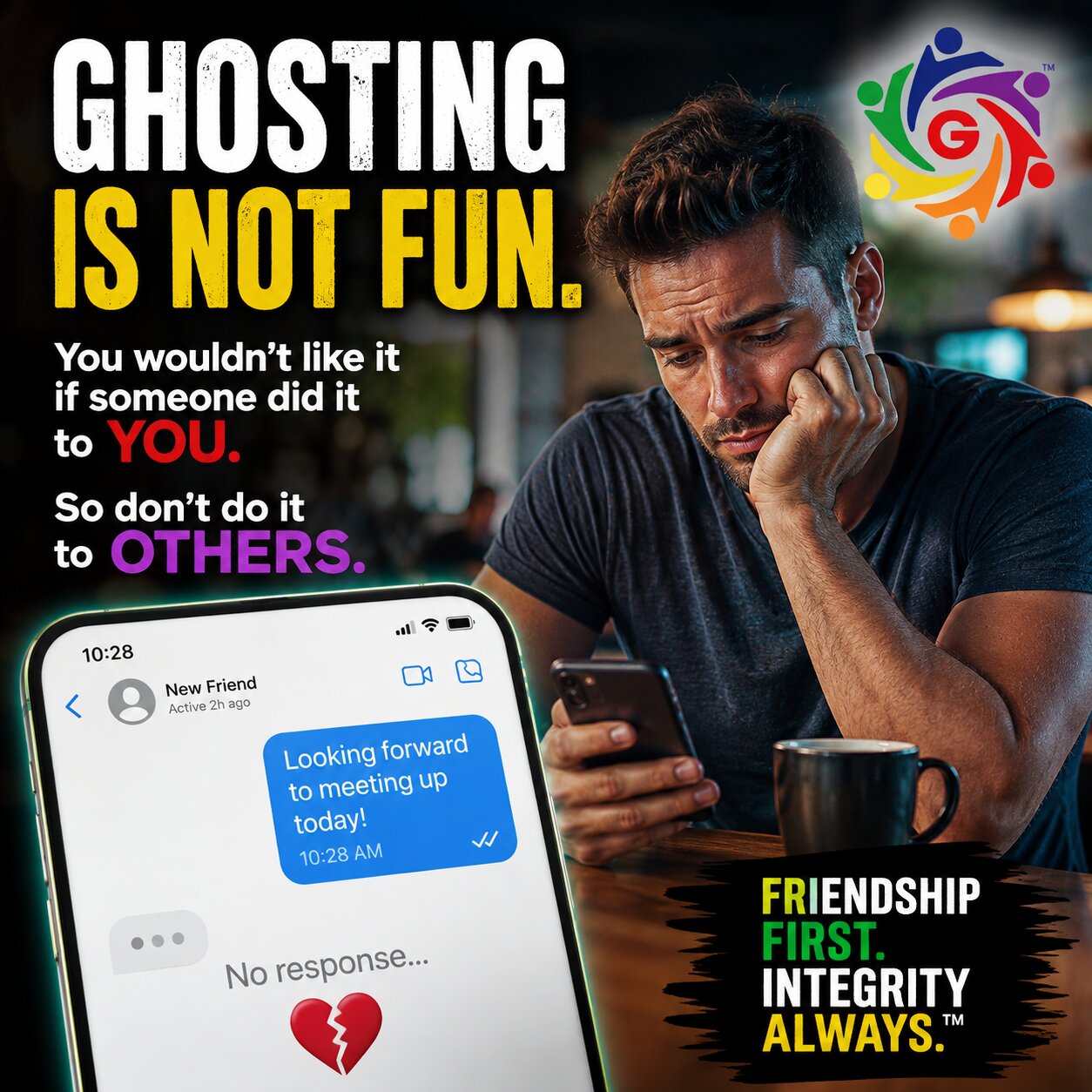
Few things about modern communication are more contradictory than ghosting. We live at a time when reaching another person has never been easier, when a message can travel across New Jersey or around the world almost instantly. Most of us carry a device that lets us communicate with nearly everyone we know throughout the day. Yet despite all of that connectivity, one of the most common frustrations in modern social life is remarkably simple: someone stops responding without saying why.
Most people know how that feels. Perhaps two people have been discussing getting together for breakfast, attending an event, meeting for dinner, taking a hike, or simply catching up, and the conversation appears completely normal until one person suddenly disappears. A message is sent and received, but no response comes; another day passes, and what had seemed like an ordinary social interaction becomes an unanswered question. The person waiting may wonder whether plans are still happening, whether something unexpected occurred, or whether the other person decided that responding was no longer worth the effort.
That experience has become so common that society has given it a familiar name: ghosting. Although the term became particularly associated with dating and romantic relationships, the behavior extends far beyond them. Friends can ghost one another, acquaintances can disappear in the middle of making plans, and people can express enthusiastic interest in attending an activity only to stop communicating when it is time to confirm. The circumstances may be different, but the underlying issue is often the same: one person is left without the information necessary to understand what is happening.
At Garden State Gay Socials, Friendship First. Integrity Always. ™ represents the philosophy behind the community; ghosting raises a larger question about how we treat one another. Nobody is obligated to accept every invitation, attend every event, continue every friendship, or disclose personal information simply because someone asks. Adults have every right to change their minds, protect their time, establish boundaries, and decide which relationships they want to pursue. Respect does not require constant availability or unlimited access to another person. It does, however, ask us to consider whether we are treating another person's time and feelings with the same basic courtesy we would hope to receive ourselves.
Ghosting Is About More Than an Unanswered Message
Not every delayed response should automatically be characterized as ghosting. Life is complicated: people get busy, messages get overlooked, work becomes demanding, family responsibilities arise, phones malfunction, and occasionally someone reads a message while distracted and genuinely forgets to respond. Reasonable people understand that nobody can be expected to respond immediately to every communication they receive.
The distinction becomes clearer when silence is intentional. If someone knows another person is waiting for an answer and deliberately avoids responding because saying no feels uncomfortable, the issue is no longer simply a forgotten message. The silence itself becomes the answer, except the person receiving it is forced to interpret it without any certainty that their interpretation is correct.
That uncertainty is one reason ghosting can feel disproportionately frustrating. A clear answer, even when it isn't what someone hoped to receive, provides closure and allows everyone involved to move forward. An unanswered message leaves the situation unresolved and can prevent the other person from making different plans, inviting someone else, changing a reservation, or simply knowing that he should stop waiting.
The problem becomes even more significant when concrete plans have already been made. If someone has reserved part of his evening, purchased a ticket, arranged transportation, changed his schedule, or declined another opportunity because he expected someone to join him, disappearing without communication affects more than a conversation. It affects another person's time, and time is one of the few things none of us can replace.
Most People Would Rather Receive an Honest No
One of the simplest ways to think about ghosting is to reverse the situation. If you had made plans with someone and could no longer attend, you would probably appreciate knowing that the plans had changed before leaving home. If you were waiting to hear whether someone was joining you for an activity, you would probably prefer a clear answer rather than spending several days wondering. If you had taken the initiative to reach out to somebody, you would probably rather hear a polite no than receive silence indefinitely.
This does not mean every social interaction requires an elaborate explanation. In many situations, a few courteous words are sufficient. Someone can say that he cannot make it, that his schedule changed, that he is going to pass this time, or that something came up and he needs to cancel. The details behind the decision may remain private, and there is no reason to demand that another person justify every choice he makes.
What matters is clarity. When someone communicates that he cannot attend, another person can adjust his plans. When someone respectfully declines an invitation, there is no need to continue wondering whether an answer is coming. When someone changes his mind and communicates that change, the situation may be disappointing, but it is understandable. A short, respectful response can prevent considerable unnecessary uncertainty.
This is also why saying no should not automatically be viewed as disrespectful. In fact, a thoughtful no can demonstrate considerably more respect than an insincere yes followed by silence. Adults should be able to decline invitations without believing that they have committed some social offense, just as the person extending an invitation should be able to receive a polite decline without taking it personally.
The Ability to Say No Is Part of Healthy Communication
Some ghosting occurs because people are uncomfortable disappointing others. They may worry that declining an invitation will hurt someone's feelings, create an awkward conversation, or make them appear unfriendly. Avoiding the message can feel easier at first because it postpones that discomfort, but silence rarely eliminates the situation. It simply transfers the discomfort to someone else.
Healthy social relationships require room for both yes and no. If every invitation becomes an obligation, people eventually stop wanting to receive invitations. If every decline is interpreted as rejection, honest communication becomes unnecessarily difficult. A stronger social culture allows someone to say, respectfully and without drama, that he cannot attend or that an activity is not for him.
There is also nothing inherently wrong with changing your mind. Someone may initially be enthusiastic about an event and later realize that his schedule does not allow it. He may discover that the cost doesn't fit his budget, decide he needs a quiet evening at home, or recognize that he committed to too much. None of those circumstances requires a lengthy defense. The respectful response is to communicate the change when reasonably possible.
The same principle applies to friendship. Not every person we meet will become a close friend, and not every promising conversation will develop into a lasting relationship. Human compatibility is complicated, and sometimes two perfectly decent people do not connect. Both people should be mature enough to recognize that not every introduction has to become something more.
Ghosting Can Discourage People From Reaching Out
The consequences of ghosting can extend beyond the individual interaction because every social experience influences whether people are willing to initiate again. Someone has to make the first move when friendships are forming. Someone has to suggest breakfast, invite another person to dinner, ask whether someone wants to attend an event, or send the message that says it was good meeting and perhaps they should get together again.
Initiating requires a small amount of vulnerability because the answer may be no. Most adults can handle a polite decline, particularly when they understand that schedules, interests, and circumstances vary. What becomes more discouraging is repeatedly receiving no answer at all.
After enough experiences like that, people can begin wondering why they should continue reaching out. They may become reluctant to extend invitations, less comfortable initiating conversations, or more hesitant about trying to turn acquaintances into friendships. The result is an unfortunate contradiction: many people say they want stronger friendships and greater community, while the social behaviors around them make others increasingly reluctant to initiate.
A healthier environment normalizes communication rather than demanding universal agreement. Someone should be able to extend an invitation knowing that either yes or no is an acceptable answer. The objective is not to pressure people into participating; it is to create a culture where people respect one another enough to communicate clearly.
Reliability Is One of the Foundations of Friendship
Friendship is often described through major qualities such as loyalty, trust, compassion, and support, but much of what makes a person trustworthy is demonstrated through considerably smaller behaviors. People notice whether someone responds, whether he generally arrives when he says he will, whether he communicates when circumstances change, and whether his actions reasonably match his words.
These behaviors gradually create reliability. When someone tells you he will meet you somewhere and consistently follows through, you begin trusting his word. When he cannot make it but takes a moment to let you know, you understand that he respects your time. When he is comfortable saying no rather than agreeing to something he has no intention of doing, you learn that his yes actually means something.
None of this requires perfection. Everyone forgets something occasionally, becomes overwhelmed, arrives late, misses a message, or handles a situation less gracefully than he might have preferred. Friendship does not require flawless behavior; it requires enough honesty and consideration that occasional mistakes remain exceptions rather than patterns.
Reliability becomes especially important within a social community because community is built through repeated interaction. The more people encounter one another, the more those small patterns begin shaping how comfortable everyone feels. A person who communicates clearly becomes easier to make plans with, while someone who repeatedly disappears creates uncertainty around even the simplest arrangements.
Technology Has Made Communication Easier and More Complicated
It would be easy to blame ghosting entirely on bad manners, but modern communication deserves a more thoughtful examination. Most people now receive an extraordinary volume of information every day through text messages, emails, social media notifications, group conversations, work platforms, event invitations, calendar alerts, and countless other digital channels. Communication has become easier to send while simultaneously becoming easier to overlook.
A familiar pattern can develop. Someone reads a message while working, driving, shopping, or doing something else that prevents an immediate response. He intends to answer later, another notification arrives, the original message disappears from immediate view, and by the time he remembers it, enough time has passed that responding feels awkward. Instead of acknowledging the delay, he postpones the response again, which only makes the situation more uncomfortable.
Understanding this dynamic does not excuse habitual ghosting, but it does provide useful perspective. Not every delayed response is a deliberate insult, and assuming the worst about another person can create unnecessary conflict. Respect should work in both directions, which means allowing people reasonable time to respond while also recognizing our own responsibility to close the communication loop when someone is waiting on us.
The technology itself is neutral. The same phone that makes ghosting easy also makes courtesy extraordinarily simple. A message explaining that plans have changed can be sent in seconds, which is why communication ultimately remains a choice.
Social Events Depend on Consideration Beyond the Individual
Ghosting can have additional consequences when organized activities are involved because events often require commitments long before participants arrive. Restaurants may need reservations, studios may schedule instructors, attractions may require advance tickets, transportation may depend on headcounts, and food may be ordered based on expected attendance.
Someone who disappears from an informal coffee invitation may inconvenience one person. In contrast, someone who commits to an organized activity and fails to communicate can affect several people behind the scenes. Organizers frequently make financial and logistical decisions based on attendance, and vendors may require commitments that cannot be changed at the last minute.
This does not mean people should attend an event when circumstances genuinely prevent them from doing so. Emergencies happen, illnesses occur, and life occasionally changes with very little warning. The distinction again comes down to reasonable communication. When someone can communicate, doing so allows organizers and other participants to make the best decisions possible with the information available.
At Garden State Gay Socials, the objective is to create enjoyable experiences where gay men can meet naturally through activities, outings, breakfasts, hikes, creative events, dining, day trips, and other opportunities throughout New Jersey. Those experiences work best when everyone recognizes that participation is part of a larger social environment in which consideration for one another matters.
Community Is Created Through Everyday Behavior
The word community is frequently used to describe organizations, groups, neighborhoods, and online spaces, but genuine community cannot be created through branding alone. An organization can provide opportunities, set expectations, organize activities, and create environments where people can meet. Still, the character of the community ultimately develops through how participants treat one another.
Community is visible in ordinary interactions. It appears when someone notices a person arriving alone and welcomes him into a conversation, when people make room at a table, when someone remembers another person's name, when different viewpoints are treated respectfully, and when participants recognize that everyone deserves the opportunity to feel comfortable and valued.
Communication is part of that culture. Letting someone know that plans changed may seem like a small act, but those small acts accumulate. They establish expectations about whether people can trust one another's commitments and whether everyone's time is considered valuable.
This is why Friendship First. Integrity Always.™ is more than a phrase attached to Garden State Gay Socials. Friendship requires more than simply gathering people in the same location, while integrity asks us to behave consistently with the values we say matter. We are built from the group up, and our Code of Conduct helps establish expectations for respectful behavior so that the community we continue building reflects those principles.
Integrity Matters Most When Courtesy Is Optional
Integrity becomes meaningful precisely because countless situations exist where nobody can force us to behave considerately. Nobody can compel someone to answer an ordinary social message, explain that plans changed, or acknowledge that another person is waiting for information. In many cases, there is no external consequence for simply disappearing.
That is exactly why the choice matters.
Integrity is demonstrated when someone behaves respectfully even when doing otherwise would be easier. It is choosing to send the uncomfortable message instead of avoiding it, acknowledging a change of plans instead of hoping the other person figures it out, and recognizing that another person's time has value even when there is nothing personally to gain from acknowledging it.
This principle extends far beyond ghosting. Communities become stronger when people behave with consideration not because they fear consequences, but because consideration has become part of the culture. That standard cannot be created by a rulebook alone; it has to be reflected in the everyday choices participants make.
Respect Also Means Respecting Boundaries
Any responsible discussion about ghosting needs to recognize an important exception. Nobody is obligated to continue communicating with someone who makes him feel unsafe, threatened, harassed, manipulated, or repeatedly disrespected. Personal safety and healthy boundaries take precedence over ordinary social etiquette.
If someone refuses to accept no, repeatedly violates boundaries, behaves aggressively, or creates an interaction in which continued communication feels unsafe, ending contact may be entirely appropriate. A philosophy of respectful communication should never be interpreted as requiring someone to maintain access for another person regardless of circumstances.
There is a substantial difference between disappearing from an ordinary social interaction because saying no feels inconvenient and ending communication because someone has created an unsafe or inappropriate situation. Treating people with respect also includes respecting ourselves enough to establish reasonable boundaries.
A healthy community must hold both ideas at the same time: people deserve consideration, and people also have the right to protect themselves.
Respecting Someone's Time Is Respecting the Person
Time is one of the most valuable things people give one another because it cannot be replaced. When someone reserves part of his day to meet another person, he may have rearranged other responsibilities, declined another invitation, traveled some distance, made a reservation, purchased something in advance, or organized the rest of his day around that commitment.
When circumstances change, communicating that change gives the other person an opportunity to reclaim his time. He can make another plan, invite somebody else, adjust a reservation, stay home, or use the time however he chooses. The communication itself may take less than a minute, but what it returns to another person can be considerably more valuable.
This is one reason ghosting should not be dismissed as merely a modern annoyance. At its core, the issue is whether we recognize that our choices can affect people beyond ourselves. Respect does not require us to sacrifice our own needs, but it does encourage us to consider the reasonable impact our decisions have on others.
Better Communication Creates Better Friendships
The strongest friendships are not those in which nobody ever changes plans or disappoints another person. That expectation would be unrealistic. Healthy friendships are those in which people can communicate honestly enough to navigate those moments without turning every inconvenience into a conflict.
Someone can say he cannot attend without fearing that the friendship is over. Someone can explain that he needs more time before committing. Someone can apologize for forgetting to respond. Someone can establish a boundary without being punished for it, and someone receiving a no can accept it without demanding an explanation.
When those behaviors become normal, friendships become easier because people spend less time interpreting silence and more time understanding one another. There is room for mistakes, but there is also an expectation that people will make a reasonable effort to communicate.
For gay men trying to build stronger friendships and a more fulfilling social life in New Jersey, that kind of environment matters. Meeting people is only the beginning. The quality of the relationships that develop afterward depends considerably on the habits people bring into them.
We Can All Do Better Without Expecting Perfection
Most people who have participated in enough social situations can probably remember a time when they did not communicate as well as they should have. Perhaps a message was forgotten, an invitation went unanswered, or an uncomfortable conversation was avoided longer than necessary. Recognizing that does not require turning a mistake into a permanent judgment about someone's character.
What matters is whether we learn from those moments.
The next time a message arrives and the answer is no, it can be answered respectfully. The next time plans change, someone can communicate before the other person is left waiting. The next time a conversation feels uncomfortable, honesty can replace avoidance when circumstances are safe and appropriate.
These are not extraordinary acts of kindness. They are ordinary habits of consideration, but ordinary habits repeated by enough people can fundamentally change the character of a community.
Ghosting Is Not Fun, So Do Not Pass It Along
The basic message behind all of this remains remarkably simple: ghosting is not fun, and most of us would not appreciate having it done to us. That alone is a good reason to think twice before doing it to someone else.
Plans will change, people will become busy, invitations will be declined, friendships will develop at different speeds, and not every social interaction will lead somewhere meaningful. None of that is a problem. A healthy social life has room for yes, no, maybe, not this time, and I changed my mind.
What makes those interactions healthier is communication.
At Garden State Gay Socials, we believe that creating meaningful opportunities for gay men to connect throughout New Jersey is only part of building community. The other part comes from the standards we bring into those experiences: treating people with respect, recognizing the value of their time, honoring appropriate boundaries, communicating with reasonable honesty, and remembering that the behavior of the people within it ultimately shapes every community.
We are built from the group up, with Friendship First—Integrity Always.™ at the heart of what we do. Our Code of Conduct helps ensure that everyone is treated with respect and that the community we build reflects those values.
The next time plans change or an invitation needs an answer, you don't need an elaborate explanation. A thoughtful response is usually enough, because the real message being communicated is larger than the words on the screen.
It says that the other person matters enough not to be left wondering.
And that is a very good place for friendship to begin.
Learn more about Garden State Gay Socials, discover the experiences we create throughout New Jersey, and review our Code of Conduct to understand the standards of respect, integrity, and consideration that guide our community.
Leave A Comment
Please login to add a comment!
Comments (0)